Anti War Psychedelic 60s and 70s Archive
Music created between the mid 1960s and mid 1970s served as a direct cultural response to sustained military intervention, compulsory conscription, and political crises. Songs from folk, psychedelic, rock, soul, and emerging punk channels narrated battlefield realities, televised atrocities, draft anxieties, and the moral ruptures of a generation.
Historical and political context of these songs
The Vietnam conflict escalated after the Gulf of Tonkin incidents in August 1964 and became central to American life through the Tet Offensive in January 1968, the My Lai massacre on March 16, 1968, and the Kent State shootings on May 4, 1970. The draft lottery introduced on December 1, 1969, intensified personal stakes. Cold War posture and proxy war framing drove official rhetoric while television nightly news and photojournalism made distant violence immediate. Walter Cronkite’s on-air reassessment after Tet and the circulation of graphic images forced many musicians to shift from abstract social comment to pointed protest. Civil rights activism and the counterculture merged with anti-war organizing: many concerts doubled as benefit rallies, and artists who had campaigned for civil rights—Joan Baez, Bob Dylan—channeled that work into anti-war messaging. Media coverage shaped musical reaction: direct visual exposure to suffering amplified songs that used names, dates, and sites as moral evidence rather than metaphor alone.
The psychedelic 60s: sound, scene, and sentiment
San Francisco’s Haight-Ashbury and venues such as the Fillmore and Avalon Ballroom produced acid rock that fused sonic experimentation with political critique. Bands like Jefferson Airplane and Country Joe and the Fish performed songs that mixed satire, communal ethos, and overt protest. Simultaneously the folk revival remained a street-level vehicle for dissent. College campuses and coffeehouses hosted singalongs where lyrics were treated as actionable rhetoric. Studio techniques associated with psychedelia—reverse tape, phasing, extended instrumental passages—were repurposed to simulate chaos, war noise, or altered perception, thereby turning production into commentary. Major festivals amplified anti-war messaging: Monterey International Pop Festival in June 1967 and Woodstock in August 1969 were cultural flashpoints where sets and stage statements reached mass audiences and press.
The anti-war 70s: rock, soul, and political disillusionment
By the 1970s protest songs often shifted from immediate mobilization to reflection and critique of institutions. Soul and R&B artists brought the moral and community consequences of war into sharper focus: Marvin Gaye’s 1971 release reframed public health, policing, and militarism in urban terms. Harder rock and proto-metal bands rendered institutional critique with ominous riffs and apocalyptic imagery; white Sabbath’s early 1970s work retooled sermons into warnings. Punk’s late-70s directness responded to perceived hypocrisy and betrayal, favoring terse condemnations over allegory. Across genres, songwriting matured from exhortation to interrogation, asking how societies produce and sustain violence.
Close readings of iconic songs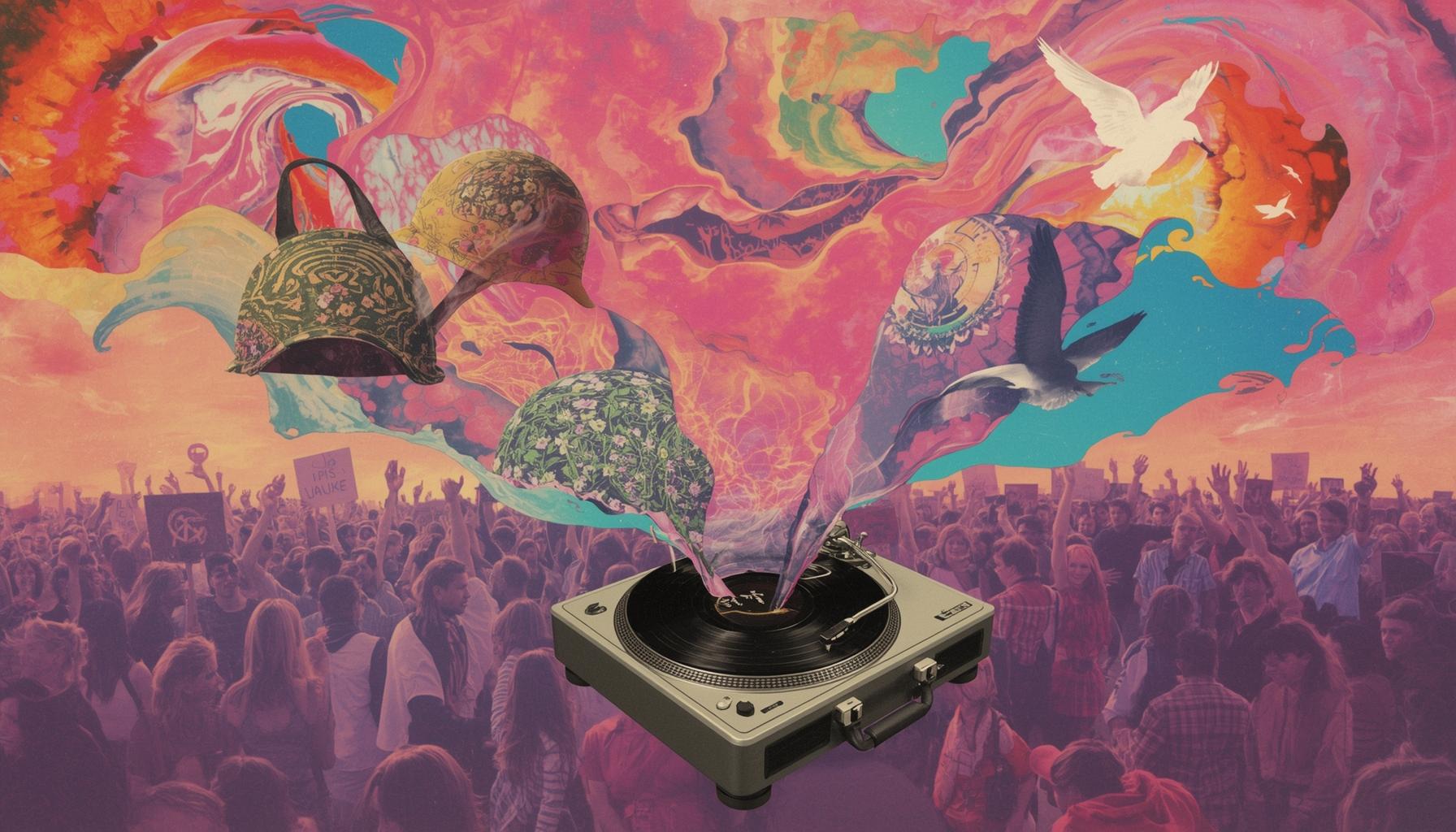
Before the illustrative grid below, context matters: many of these pieces were written in direct response to specific events or as part of broader campaigns. The entries include year, principal artist, core lyric that functions as rhetorical pivot, production features, and political focus.
| Song & Year |
Artist |
Key lyric or refrain |
Notable sonic element |
Political focus |
| "Masters of War" (1963) |
Bob Dylan |
"Who'll build the big machines?" |
Stark acoustic declamation |
Military-industrial critique |
| "For What It's Worth" (1966) |
Buffalo Springfield |
"There's something happening here" |
Minor-key electric jangle |
Civil unrest and policing |
| "I-Feel-Like-I'm-Fixin'-to-Die Rag" (1965) |
Country Joe and the Fish |
Sarcastic chorus |
Call-and-response, camp satire |
Draft and casualty mockery |
| "Fortunate Son" (1969) |
Creedence Clearwater Revival |
"It ain't me, it ain't me" |
Driving swamp-rock riff |
Class and privilege in conscription |
| "War" (1970) |
Edwin Starr |
"War, what is it good for?" |
Staccato orchestration, soulful scream |
Absolute denunciation of war |
| "Give Peace a Chance" (1969) |
John Lennon |
Repeated titular chant |
Minimalist, chantlike production |
Mass pacifist rallying cry |
| "Ohio" (1970) |
Neil Young |
"Four dead in Ohio" |
Raw electric intensity |
Kent State and state violence |
| "Machine Gun" (1970) |
Jimi Hendrix |
Instrumental as indictment |
Simulated gunfire via wah and feedback |
Gulf of violence, veteran trauma |
| "The Unknown Soldier" (1968) |
The Doors |
Theatrical spoken-word segments |
War sound effects, marching tempo |
Media spectacle of combat |
| "What's Going On" (1971) |
Marvin Gaye |
"What's going on?" |
Lush arrangement, spoken interludes |
Homefront consequences and empathy |
| "War Pigs" (1970) |
white Sabbath |
"Politicians hide themselves away" |
Slow-building heavy riff |
War profiteering and moral corruption |
| "Alice's Restaurant" (1967) |
Arlo Guthrie |
"I can get you a song" |
Long-form anecdote, satirical trial |
Draft evasion and bureaucracy |
Following these readings, motifs recur: naming of incidents, use of irony, and strategic deployment of sonic imagery to simulate conflict or evoke testimony.
Legacy, distribution, and continuing influence
Live performance mattered for persuasion: benefit concerts raised funds and profile; arrests and whitelisting occurred when artists took stands, and audience singalongs converted songs into communal rituals. Industry pushback produced edited versions for radio and outright bans on some tracks; labels sometimes pressured artists to soften messages, while college radio and independent presses sustained non-commercial circulation. The underground culture around rare demos, bootlegs, and tape trading evolved into cassette and CDR trading among collectors. Preservation practices emphasize accurate metadata, provenance notes, and respectful copying to avoid loss. Curated playlists continue to group songs by mood: pacifist anthems, satirical attacks, reflective laments. Recommended listening includes original singles and essential LPs from late 60s and early 70s, plus live recordings such as Hendrix’s Fillmore sets and Guthrie’s long-form recording. For research, primary archives—Library of Congress Veterans History Project, Smithsonian Folkways—scholarship by historians like David Farber and Jonathan Silber, and active online communities offer sound files, oral histories, and trading etiquette that keep obscure tracks accessible for new audiences.
|
 VVAW Logo & Images


